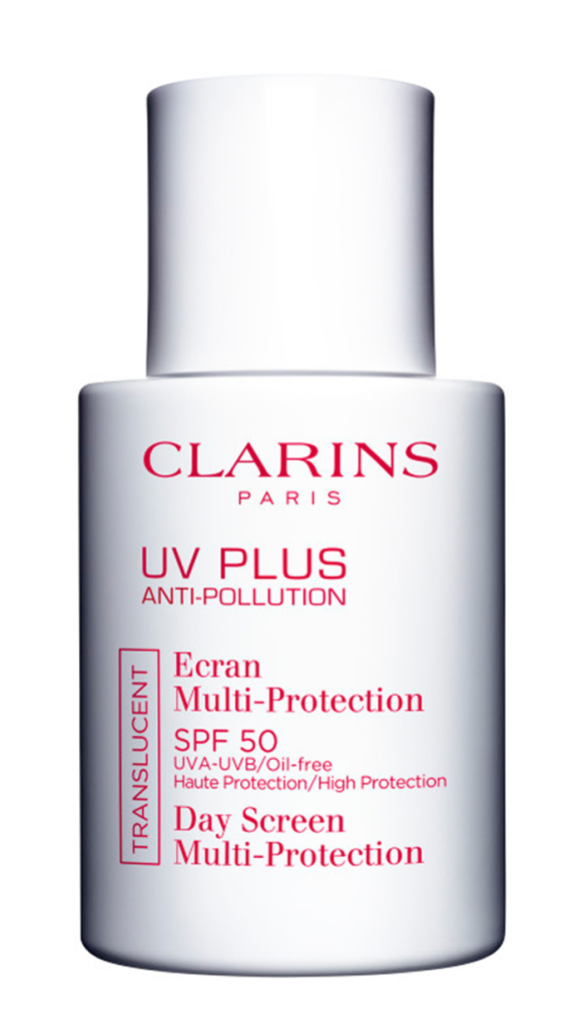
Clarins UV PLUS UV+ SPF50 neutral
June 10, 2016
I love the milky UV PLUS UV+ SPF50 neutral.
It blends so easily into the skin not only protecting the skin against harmful UV rays but also from the free radicals and pollution and dust as you battle city life and commute.
It’s oil free texture is super absorbing and leaves your skin feeling soft and satiny with a nice glow. Apply post your daily skincare regime and before applying make-up.
Great for highly tropical Asian Countries.
INGREDIENTS (refer to http://int.clarins.com/en/uv–spf50-neutral/C010410024.html?start=1)
Organic Alpine sanicle extract exclusive to Clarins: strengthens the skin’s anti-oxidant system supplying a first line of defence at the surface.
Cantaloupe melon extract: rich in anti-oxidants, it protects the cells from oxidative stress due to UV rays and pollution.
Organic blackcurrant extract: helps to prevent the appearance of redness and tightness caused by pollution and UV rays.
Hyaluronic acid: protects the skin against dehydration linked to depletion of the hydrolipidic film.
Clarins anti-pollution complex: helps protect the skin from the damaging effects of pollution.
Scientists discovered something alarming seeping out from beneath the ocean around Antarctica
после анального секса
Planet-heating methane is escaping from cracks in the Antarctic seabed as the region warms, with new seeps being discovered at an “astonishing rate,” scientists have found, raising fears that future global warming predictions may have been underestimated.
Huge amounts of methane lie in reservoirs that have formed over millennia beneath the seafloor around the world. This invisible, climate-polluting gas can escape into the water through fissures in the sea floor, often revealing itself with a stream of bubbles weaving their way up to the ocean surface.
https://vk.com/video-65850381_456243308
порно анальный секс
Relatively little is known about these underwater seeps, how they work, how many there are, and how much methane reaches the atmosphere versus how much is eaten by methane-munching microbes living beneath the ocean.
But scientists are keen to better understand them, as this super-polluting gas traps around 80 times more heat than carbon dioxide in its first 20 years in the atmosphere.
Methane seeps in Antarctica are among the least understood on the planet, so a team of international scientists set out to find them. They used a combination of ship-based acoustic surveys, remotely operated vehicles and divers to sample a range of sites in the Ross Sea, a bay in Antarctica’s Southern Ocean, at depths between 16 and 790 feet.
What they found surprised them. They identified more than 40 methane seeps in the shallow water of the Ross Sea, according to the study published this month in Nature Communications.
Bubbles rising from a methane seep at Cape Evans, Antarctica. Leigh Tate, Earth Sciences New Zealand
Many of the seeps were found at sites that had been repeatedly studied before, suggesting they were new. This may indicate a “fundamental shift” in the methane released in the region, according to the report.
Methane seeps are relatively common globally, but previously there was only one confirmed active seep in the Antarctic, said Sarah Seabrook, a report author and a marine scientist at Earth Sciences New Zealand, a research organization. “Something that was thought to be rare is now seemingly becoming widespread,” she told CNN.
Every seep they discovered was accompanied by an “immediate excitement” that was “quickly replaced with anxiety and concern,” Seabrook said.
The fear is these seeps could rapidly transfer methane into the atmosphere, making them a source of planet-heating pollution that is not currently factored into future climate change predictions.
The scientists are also concerned the methane could have cascading impacts on marine life.
Scientists discovered something alarming seeping out from beneath the ocean around Antarctica
раз анальный секс
Planet-heating methane is escaping from cracks in the Antarctic seabed as the region warms, with new seeps being discovered at an “astonishing rate,” scientists have found, raising fears that future global warming predictions may have been underestimated.
Huge amounts of methane lie in reservoirs that have formed over millennia beneath the seafloor around the world. This invisible, climate-polluting gas can escape into the water through fissures in the sea floor, often revealing itself with a stream of bubbles weaving their way up to the ocean surface.
https://www.youtube.com/watch?v=_t8HwqWe89o
гей порно геей
Relatively little is known about these underwater seeps, how they work, how many there are, and how much methane reaches the atmosphere versus how much is eaten by methane-munching microbes living beneath the ocean.
But scientists are keen to better understand them, as this super-polluting gas traps around 80 times more heat than carbon dioxide in its first 20 years in the atmosphere.
Methane seeps in Antarctica are among the least understood on the planet, so a team of international scientists set out to find them. They used a combination of ship-based acoustic surveys, remotely operated vehicles and divers to sample a range of sites in the Ross Sea, a bay in Antarctica’s Southern Ocean, at depths between 16 and 790 feet.
What they found surprised them. They identified more than 40 methane seeps in the shallow water of the Ross Sea, according to the study published this month in Nature Communications.
Bubbles rising from a methane seep at Cape Evans, Antarctica. Leigh Tate, Earth Sciences New Zealand
Many of the seeps were found at sites that had been repeatedly studied before, suggesting they were new. This may indicate a “fundamental shift” in the methane released in the region, according to the report.
Methane seeps are relatively common globally, but previously there was only one confirmed active seep in the Antarctic, said Sarah Seabrook, a report author and a marine scientist at Earth Sciences New Zealand, a research organization. “Something that was thought to be rare is now seemingly becoming widespread,” she told CNN.
Every seep they discovered was accompanied by an “immediate excitement” that was “quickly replaced with anxiety and concern,” Seabrook said.
The fear is these seeps could rapidly transfer methane into the atmosphere, making them a source of planet-heating pollution that is not currently factored into future climate change predictions.
The scientists are also concerned the methane could have cascading impacts on marine life.